
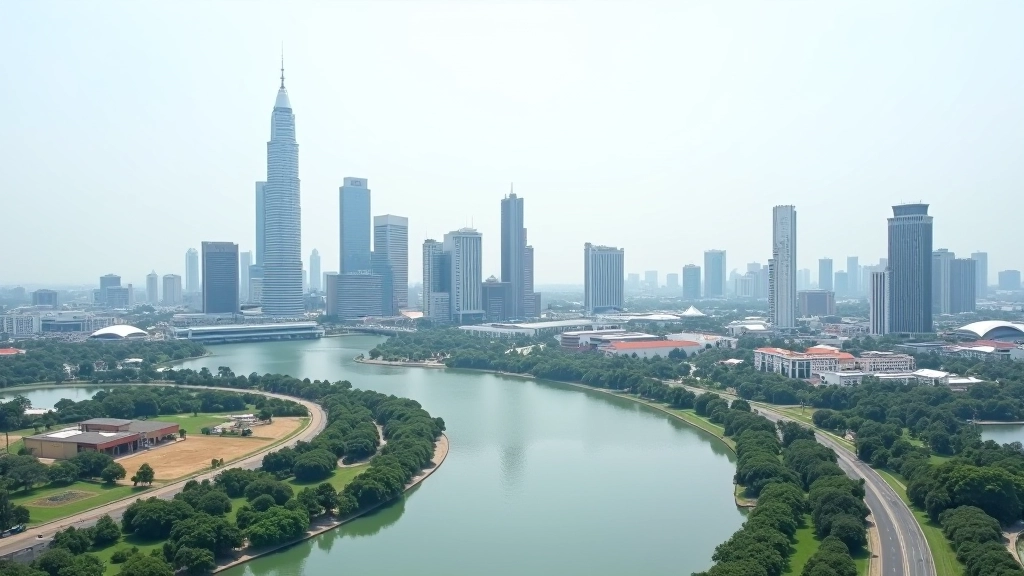
Iskandar Malaysia: Growth Patterns and Investment Performance
How the southern corridor became Malaysia’s fastest-growing economic zone and what it reveals about regional development strategies.
Read MoreExplore regional development strategies, growth disparities, and practical insights into Iskandar Malaysia, ECER, and the 12th Malaysia Plan’s regional allocation framework.
Regional economic corridors drive Malaysia’s development agenda. From Peninsular Malaysia’s established hubs to Sabah and Sarawak’s emerging opportunities, these zones shape where investment flows and how communities grow. Understanding these frameworks helps you see the bigger picture of Malaysia’s economic landscape.

Practical resources to understand regional development patterns and economic corridor performance.
How the southern corridor became Malaysia’s fastest-growing economic zone and what it reveals about regional development strategies.
Read More
Breaking down the East Coast Economic Region’s actual performance metrics and where development has concentrated versus expectations.
Read More
Why East Malaysia’s development lags behind Peninsular Malaysia and what recent policy shifts mean for regional equity.
Read More
How population movement between regions reshapes local economies and what it reveals about corridor effectiveness.
Read MoreUnderstanding these core ideas helps explain why economic corridors matter for Malaysia’s future.
Corridors aren’t just geographic zones—they’re integrated networks of ports, highways, industrial areas, and service centers designed to attract investment and create jobs. When they work well, they become self-reinforcing: more businesses arrive, infrastructure improves, talent concentrates, and economic activity accelerates. Iskandar Malaysia demonstrates this effect. It’s not one project but a coordinated ecosystem spanning manufacturing, logistics, tourism, and technology sectors.
Peninsular Malaysia captured most of Malaysia’s industrial development historically. Geography, infrastructure investment patterns, and market proximity all favored the west coast. Sabah and Sarawak have larger land areas but smaller populations, fewer ports, and less developed road networks. This wasn’t accidental—it reflected where capital flowed. The 12th Malaysia Plan tries to rebalance this by directing more resources eastward, but structural advantages don’t shift quickly.
People move toward jobs and better incomes. When Iskandar Malaysia grew, it attracted workers from less-developed regions. This creates opportunities for migrants but also strains housing, services, and social cohesion in destination cities. It also drains talent from origin regions, potentially deepening rural stagnation. Understanding this dynamic is essential for evaluating whether corridors truly lift all regions or just concentrate wealth further.
Malaysia’s five-year plans allocate billions to infrastructure, incentives, and development programs. The 12th Plan (2021-2025) explicitly targets regional balance, increasing allocations to underperforming areas. But spending alone doesn’t guarantee results. Effectiveness depends on project selection, execution quality, institutional capacity, and whether complementary conditions exist—like skilled workforces or market demand.
Evaluating whether economic corridors actually deliver requires looking beyond announcements and examining real outcomes. Here’s what matters: investment flows (are companies genuinely moving capital into the corridor, or just receiving subsidies?), employment creation (how many jobs emerged, at what wage levels, in which sectors?), and whether local businesses benefited or were crowded out by larger firms. Infrastructure usage tells you if projects match actual demand. Population growth reveals whether people see genuine opportunity or are just chasing short-term wage premiums.
Regional disparity metrics shouldn’t focus solely on GDP but on per capita income, poverty rates, education access, and healthcare quality. A region might show headline growth while ordinary people see little improvement if wealth concentrates among a small elite. That’s why comparing Iskandar Malaysia’s growth (rapid but concentrated in services and property) against ECER’s slower progress (more distributed but less intensive) reveals different development models with different distributional consequences.
The 12th Malaysia Plan’s regional allocation strategy signals where policymakers think opportunity lies. But allocations reflect political judgment as much as economic logic. Understanding the gap between stated priorities and actual resource deployment—and between development spending and measurable outcomes—separates informed analysis from wishful thinking. That’s where these guides come in.